

Follow me for more recent updates; remember always adjust the seasoning and ingredients according to your own and loved ones’ dietary needs, and the most important ingredients, COOK with LOTS of LOVE and PATIENCE (OO).
One pot suppers season is back in full swing!!
If you have been following my Instagram account you probably notice my claypot has been making a few appearances in my feed since late September…
This month is all about Japanese comfort foods: Matsutake-Chanterelle mushroom rice, Japanese Oden stew and my take on the popular homestyle dish Niku-jaga, which literally means “Meat and potatoes” – I named my dish Cauli-Niku-Jaga (see picture above).
The cooking method for the “jaga” is exactly the same as the making of a regular Niku-jaga with a couple minor tweaks: barley fed pork belly slices were used instead of beef, the addition of two vegetable component : edamame beans and cauliflower florets were added (1-1 cauliflower-potato ratio and about 1 cup of beans); I have also changed things up a little with the meat stewing process. To soften meat I usually use orange juice, the usage of sugar to soften the texture of the meat is a more suitable and great tip from Chef Masa from Masa’s ABC Cooking.
Ingredients and Preparation (2-4 people): (Part of Recipe adapted from Masa’s ABC Cooking)
200 grams of thinly sliced pork belly (Sliced in half, marinade in 1 teaspoon of coconut palm sugar(*my preference only) and 1 Tablespoon of sake for 15 to 20 minutes, set aside)
Prepare all the vegetables: 1 onion (medium size, sliced), 4 potatoes (I’ve used medium size creamer potatoes (usually russets are used) – quartered, edges slightly”peeled”*to prevent breaking up while cooking, in Japanese the method is called “mentori”, then soaked in water for 10-15 minutes, drained), cauliflower (florets – about 1 1/2 cups (to your liking, chopped about same size as carrot), 2 medium carrot (peeled and chopped in rolling wedges, size slightly smaller than potatoes because it takes longer to cook), 1 package of shirataki noodles (blanched, rinsed and drained), 1 cup of edamame beans (frozen and shelled – blanched then shocked in cold water, drained and set aside)
Prepare the dashi stock (recipe in my archives or you can use water) – 700 to 800 ml (I usually make extra just in case I need more, it not available, just use water).
Measure the seasoning: 3-4 Tablespoons Tamari or organic low sodium soy sauce (*can be substituted with regular soy), 3-4 Tablespoons sake, 2 Tablespoons of Mirin, 1 Tablespoon coconut brown sugar (**can be substituted; this is my preference)
Cooking Process all in one:
Over medium high heat, use a large pan (a braiser would be excellent, I used a Japanese donabe) and add 1 teaspoon of vegetable oil (something neutral of your choice – canola or grape seed oil), saute the pork slices until slightly browned, removed from pan and set aside.
Add slice onions and carrots, saute until they slightly browned.
Add potatoes to the pan, gently mix well with onion and carrots, then add the drained shirataki noodles, continue to saute, make sure the shirataki noodles do not lump together and do not mash the potatoes.
Add dashi stock to pan; make sure you have enough stock to cover all ingredients
Once it comes to a boil, turn the heat down to medium and skim off the scum. Add seasoning to pan, stir and mix well. Cover the lid and let ingredients cook for approximately 6 minutes.
Remove the lid then add pork slices, make sure the slices are evenly distributed, then sprinkle the cooked edamame beans. When meat is cooked, taste and adjust seasoning if necessary. Remove from heat and let it stand for while before serving, the ingredients will absorb the flavours!
***Note: This is the step which I have tweaked to keep the meat tender. You can watch his original video for his method and wonderful cooking tips (Masa ABC cooking on YouTube )
If you want a thicker sauce, you can turn up the heat and the sauce will reduce if you cook it a little longer.
For this dish the most difficult part would be balancing the sweetness and saltiness; just keep tweaking and you will find the balance to your liking, remember it also depends on what kind of sweetener you are using. Do not make it overly sweet!
My sources in Vancouver for ingredients: Nikuya Meats (for the pork slices, in Richmond BC), Sakura-ya (517 East Broadway, Vancouver, BC) and Whole Foods (various locations – for Delta’s Fraserland Farms Creamer potatoes).

You know Fall is here when matsutake mushroom (Japanese pine mushroom) becomes available; this year I changed things up a bit and added chanterelle mushrooms, and voila it really works. Remember back in August 2016 I recommended Food Video Channel (in Mandarin Chinese) on YouTube (also on Wechat, Weibo) ? Well the chanterelle mushroom mix idea is also from one the videos I watched on that channel, apparently somewhere in Yunnan province chanterelle mushrooms are also available and they usually saute them together with Chinese ham.
It is very difficult to purchase high quality cured ham here in Vancouver; last Fall I experimented with Italian cured pork jowl “guanciale” and lay them underneath the rice, then topped with sliced (torn actually) matsutake (doused with little sake earlier) and the kombu (kelp from the dashi making). When rice is almost cooked (with approximately 10 minutes remaining), I used organic unsalted butter to saute the remaining mushrooms then add to the rice cooker and let everything finish cooking together. It worked beautifully and my family totally loved it.
This year I added the chanterelle mushrooms (thanks to a trip to Vancouver Farmer’s Market I got the fresh chanterelle) to cook with everything else initially in the rice cooker, repeat the same organic butter saute finishing process. The chanterelle mushrooms were quite difficult to clean, however it added another depth of flavor to the rice and the results were beyond my own expectations.
Because the mushrooms are quite expensive, I use them sparingly. For 3 cups of rice (I used Haiga rice), I use approximately 1/2 to 1 lb of mushrooms (depends on budget, grade and availability).
I used the rice cooker for convenience because my Zojirushi has the “Mixed Rice” setting; the rice is also cooked in homemade dashi, with the standard soy sauce, mirin and sake seasoning (3-2-1 ratio which works very well – always adjust according to your own taste).
My “hybrid” version (that’s what my friend “mydoctorgreen” called it) tries to retain the nuance of the original concept, keeping things simple without over-seasoning, just adding another layer of flavor to enhance and showcase the star ingredient, the matsutake. The chanterelle also did not overpower and they co-existed together harmoniously.
Important notes: Remember the guanciale is a little salty so factor that in when tasting. The rice should be cleaned and soaked prior to cooking; because you are adding mushroom, reduce the water (my experience at least 1/4 less liquid) and the guanciale should be removed before serving. This mushroom rice simple recipe should work well with shimeji and maitake mushrooms also, be adventurous and experiment.
It tastes as good as it looks (OO).
My source for Matsutake mushroom in Vancouver: Fujiya Japanese Food Store on Clark Drive (East Vancouver).
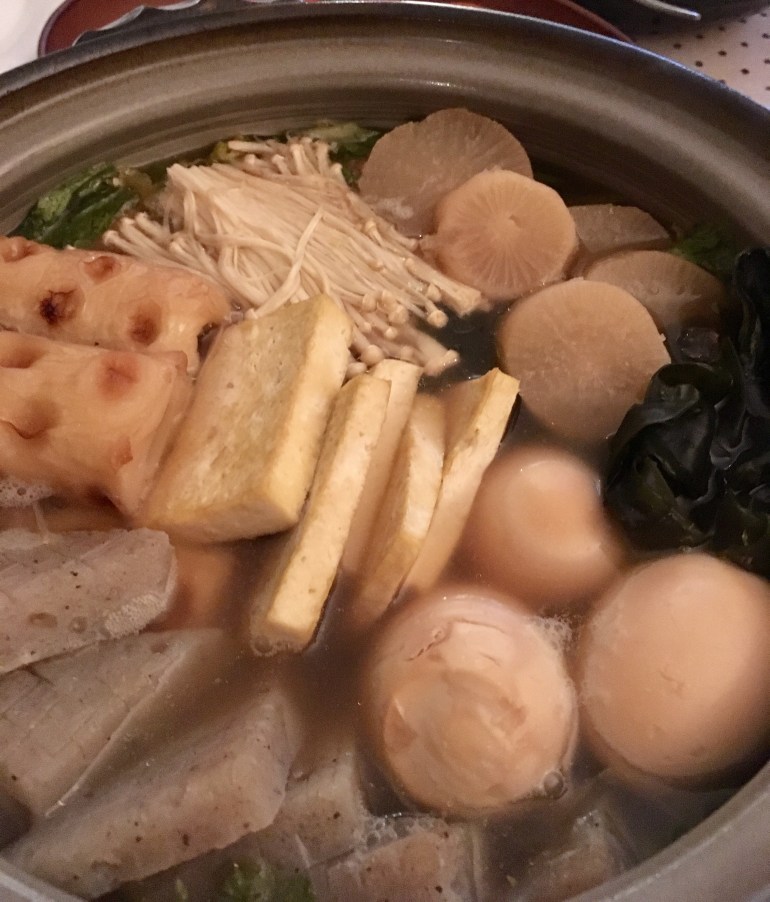
Japanese Oden with Umeboshi flavoring – Recipe adapted from Masa’s ABC Cooking
My Japanese friends taught me how to make oden a long time ago without any specific recipe; just like any regular home cook/hobby chef, sometimes we just make something “on the fly” based on our existing knowledge. When I try to make a new dish, I like to research a few recipes, apply my own skills and tweak things to our tastes, hence the creation of “hybrid” food (like my cauli-niku-jaga).
I don’t get to make oden very often at home because my husband somehow must have experienced a childhood episode which may have scarred him for life, he finds the idea of having oden repulsive. Well that being said, I would cook it for myself when he happens to be away on business trips (Ha ><). The most recent creation happened a couple weekends ago when my friends came over for a gathering.
Recently I have been watching Chef Masa’s channel quite a lot; been busy comparing and tweaking my own recipes, learning new tips and applying new techniques. Changes are also made according to our preference and dietary needs! The more I study about cooking, the more I love it.
This is what I truly love to do during my down time at home.
I highly recommend you to watch his original video for wonderful cooking tips and methods.
This dish is really great for cold weather and the recipe is good for 2 people, be sure to try it out this winter!
Ingredients and Preparation for Soup base: 500 ml homemade dashi, 2 Tablespoons Sake, 1-2 Tablespoon Mirin (I used 2), 1/2 to 1 Tablespoon tamari (*my preference, use regular soy and don’t add too much because it will darken the soup), 1 teaspoon sugar (**I used coconut palm sugar) and 1/2 teaspoon sea salt.
Add all the above ingredients in this particular order to the claypot (Japanese donabe), taste and adjust accordingly.
Oden Ingredients and Preparation:
Japanese daikon radish (peeled skin, sliced approximately 4 cm thickness, then use small knife and smooth the edge of the daikon (Mentori method as mentioned and used for the potatoes in previous recipe) – mark an “X” cut in the middle (do not cut through completely), using medium heat, at radish slices to cold water, bring to boil and cook until soften. While daikon is cooking, prepare the other ingredients. Check on the daikon periodically, when cooked through and softened, remove from pot gently and set aside.
Enoki Mushroom: 1 small package, ends cut, set aside.
Napa Cabbage : a small one would do, washed, sliced to bite size, blanched, drained. Lightly squeeze excess water when napa is cool enough to handle.
Japanese firm tofu (approximately half a box, 200 g – slice into squares. Using medium heat, brush the pan lightly with vegetable oil, sear and brown all sides of the tofu lightly. It is easier to handle by using a small pair of tongs.
Japanese konjac (konnyaku): 1 small package, cut into square pieces (approximately 2 cm thick), lightly scored both sides (think Cuttlefish Chinese way, the konjac will absorb the flavor). Then sliced into triangular pieces. Parboil konjac in hot water to get rid of the “fishy” taste, set aside.
Kombu (kelp): The cooked kelp from the dashi making can be added to the oden. Rinse and lightly scrub off the “sliminess” without breaking the kelp, cut into trips and tie into a bow shape.
Chikuwa (tube like fish cake purchased at Japanese food store) stuffed with asparagus: 2 pieces of chikuwa and 2 -4 stalks of asparagus (ends trimmed, blanched, shocked in ice (to keep color) and stuff inside chikuwa. If the asparagus stalks are really thin, you may need two for each chikuwa). Slice each chikuwa into 3 pieces, place 3 pieces of chikuwa on each skewer.
Eggs (2 large eggs) – boiled and peeled, set aside.
Lay all ingredients nicely and get ready to cook in the donabe which you have used to prepare the soup base earlier.
Using medium low heat, keep the soup base in a simmer and add 2 umeboshi (store bought pickled plums – removed the seed); put the napa cabbage, daikon, cooked egg, konjac, tofu and kombu in this order. Turn up to medium high heat, cover with lid and cook the ingredients for approximately 4-5 minutes.
Remove the lid (be careful as it will be very hot!), check the ingredients and if necessary, cover again and cook for another 2 to 3 minutes.
Remove the lid (again be careful) and gently add the chikuwa skewers and enoki mushrooms. cover again and cook for another 2 to 3 minutes.
The Delicious oden should be ready…once you open the lid, steam will come through and you will see a nice bubbling action; hear a “bub bub bub bub bub” bubbling sound…and smell a whiff of the pickled plums flavor….
**My Verdict: Chef Masa‘s idea of adding umeboshi to the soup base adds freshness and slight “tartness” which my friends and I enjoyed immensely. This is such a wonderful idea which I am trying to work into other recipes. Thank you Chef Masa for all your cooking tips!
Notes:
In the video he made Japanese napa cabbage rolls; I didn’t want any meat in this dish so I did not replicate the recipe. The cooking time will definitely be slightly longer if you include the cabbage rolls. Other fish cakes (can be purchased at Japanese deli) and Mochi bags (kinchaku – mochi stuffed in fried tofu skin) are great oden ingredients. I avoid eating processed foods so I may skip the chikuwa next time.
I have a bigger size donabe so I was able to cook more ingredients at the same time, and I prepared more dashi.
**Potatoes and Daikon have sharp edges which need to be removed before cooking, otherwise when the pieces cook together in the pot, they will start rubbing and it will cause breakage. The method is called “mentori”.
My sources in Vancouver: Fujiya (Japanese food store on Clark Drive in East Vancouver), Sakura-ya (East Broadway and Fraser in East Vancouver).




 My Golden Apron