One late May sunny Saturday morning, at exactly 11:10am, we were already sitting outside of Farmer’s Apprentice restaurant, waiting anxiously for the restaurant to open for brunch. I figured 20 minutes wait is totally acceptable and at exactly 11:30am sharp, the hostess came out and started to seat everyone. I assured you within that short time frame, the entrance were already filled with people; miraculously everyone was in “cue” and our friendly hostess was able to coordinate and seat everyone in an orderly fashion.
Located on the Fairview Slopes on 6th Avenueand Granville Street, honestly it is lovely to see another simple (Salade de fruits Cafe is just up one block) restaurant opened in the posh South Granville neighbourhood; the interior is rustic, the atmosphere is friendly and relaxing… the brunch menu was simple with a twist of imagination; the dishes we had were good.
Perfect poached egg!Buttery sablefish with tangy parsley dill sauce
I had the healthy dish – Grains cooked in asparagus juice, asparagus, hazelnuts, pea shoots and poached eggs (warm organic bread ordered separately)- I know the ingredients may not exactly sound very tempting, however I find the idea itself very interesting and I never would have imagined all these flavours would work quite well together. Some diners may find the portion (Vancouver/North American supersize) a bit small, personally I think it’s just right and this is actually a very filling dish.
Andy had the smoked sablefish, potatoes and poached eggs with parsley dill sauce; the fish was buttery, the sauce was creamy with just the right amount of tanginess, it “disappeared” in no time…
This is one of the rare times I did not do any thorough research or read up on the chef’s profile prior to our visit; we went because we happened to walk by this place one day some time ago, we liked its name and the vibe, and sure glad we finally went (OO).
Friendly and fast service, casual atmosphere, fresh farm to table menu which changes constantly (items which I’ve mentioned may not be available), street parking (mostly metered) available; if you live in the neighbourhood, walking is the best way to get there.
Brunch is first come first serve basis, I’m sure the restaurant has gotten even busier since winning the 2014 Vancouver restaurant awards; get there early!
I recently made this refreshing and nutritious Japanese soup for a light Sunday night supper; the recipe is adapted from a Japanese soup cookbook which focuses on using fresh simple ingredients and features different combination of Japanese flavours.
Ingredients: (serves 2)
1 cup chopped napa cabbage, 4 fresh shiitake mushroom, 8 cherry tomatoes, 1 cup water, 1 cup dashi, 1-2 teaspoon organic soy sauce, pinch of salt and pepper to taste, dried shrimp (optional).
Notes on preparing the dashi:
Dashi is a fundamental ingredient to many Japanese dishes; it is used in miso soups, noodle soup, stews (oden) and sauces.
For your convenience, you can purchase the instant bonito stock packages which are readily available at Japanese food stores, and follow the instructions.
I actually made my own awase dashi (basic stock), it is a combination of kombu (kelp) and katsuobushi (bonito flakes) and I have been using this recipe from Practical Japanese Cooking (by Shizuo Tsuji and Koichiro Hata) ; you can also find recipes available online.
Preparation:
– Cut cabbage into bite size pieces, remove the stems from shiitake mushrooms and sliced them into quarters; remove the skin from the cherry tomatoes
– In large saucepan, add water, dashi, Napa cabbage, shiitake mushroom and cherry tomatoes, cover with lid.
– Bring to boil, reduce heat to medium-low and simmer for 15 to 20 minutes
– Add soy sauce, salt and pepper to taste, garnish with dried shrimp (optional).
Caesar salad has always been my father’s favourite; I researched and came up with a lighter version and definitely will try to make this for him on my next visit back home. You can always add a protein (grilled chicken or salmon) to turn this first course into a substantial main course; the recipe is inspired by Canadian Living Magazine and Epicurious.
Ingredients: (serves 2-4)
Caesar Dressing – 1/2 cup 2% plain Greek yogurt, 2 Tablespoon olive oil, 2 Tablespoon freshly squeezed lemon juice, 2 cloves of garlic (pressed), 1/4 cup freshly grated parmigiano-reggiano cheese, 6 anchovies (drained and mashed), 1 Tablespoon Dijon mustard, 1 Tablespoon Worcestershire sauce, finely grated lemon zest (1 lemon), pinch of salt and cracked black pepper, season to taste.
3 cups Tuscan kale (tough stems removed, cut into ribbons), 3 cups Green kale (tough stems removed, quickly blanched in boiling water, cut into ribbons), half loaf day old sourdough bread (cut into 3/4 inch cubes), 1-2 Tablespoon olive oil.
2 hard-boiled egg, peeled and grated
To prepare croutons:
– Pre heat the oven to 350 degrees F.
– Hand tear (or cut) the bread into 3/4 inch cubes and put them in a bowl. Add olive oil, lightly sprinkle some parmigiano-reggiano, season with salt and pepper. Toss well and make sure the pieces are coated evenly. Spread the cubes out evenly on a baking sheet and bake until golden brown, about 15-20 minutes. Let them cool down before tossing into the salad.
To prepare dressing:
In bowl, whisk the yogurt, with the anchovies, garlic, Dijon mustard, Worcestershire sauce and lemon juice. Slowly whisk in the olive oil until combined; then add half the cheese, season with salt (if necessary) and pepper.
To assemble the salad:
In large bowl, combine the Tuscan kale and green kale with enough salad dressing to your liking, add the grated egg, croutons and some extra parmigiano-reggiano and toss salad well. Serve immediately, the remaining dressing can be passed around the table.
Notes:
I used very little salt for this recipe as we are using anchovies and parmigiano-reggiano cheese, do not over dress the salad. Remember always adjust the flavors according to your taste and dietary needs (OO).
PS. A big thank you to the listener (Janice K.) who sent me an email asking for the titles, I didn’t realize I completely forgot to include the information in yesterday’s recap; it was a wonderful reminder, thank you again (OO).
Hi everyone, thank you very much for tuning in this morning! Here are the links and information which I mentioned on Ms. Deborah Moore’s “Modern Deborah” on AM 1470; I have already posted the Corn Soup recipe; the Egg Salad recipe will be posted shortly.
Back in January I’ve promised to post the California Roll Recipe, it’s now available under “RECIPE – NOT REAL SUSHI: California Roll”.
If you have any questions, you are welcome to contact me at goldenapron@gmail.com. ENJOY (OO)
Mayonnaise used for Egg Salad: The Ojai Cook Lemonaise (Vancouver readers: available at Choices Market, Pete’s Meats (on Arbutus), Nesters Food Market.
Kurobuta (Black pig) sausages for Japanese style hot dogs: Nikuya Meat Store – 11220 Voyageur Way in Richmond, BC (It’s a side street off Bridgeport), http://www.nikuya.ca/.
St. Dalfour Raspberry and Pomegranate Fruit Spread: Available at Choices Market, Whole Foods, London Drugs. Other favourite fruit spreads: Strawberry, Blueberry.
London Fog Layer Cake: http://www.cadeauxbakery.com/index2.php#/home/
Motomachi Shokudo: 740 Denman Street, Vancouver, BC for Ramen (vegetable ramen, great gyozas, review will be posted shortly).
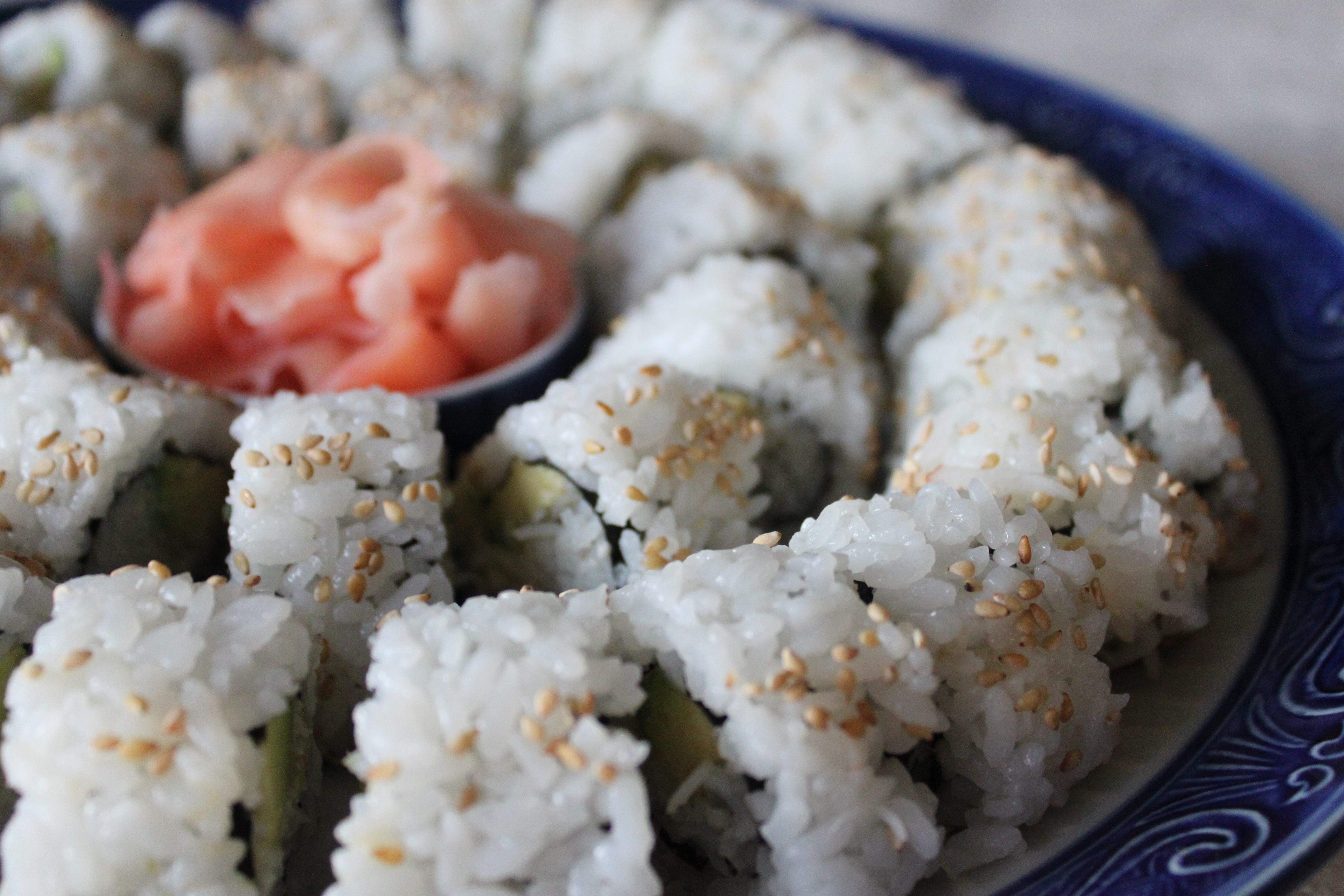
Our family’s “Not Real” Sushi – California Roll, served on traditional Japanese platter
Every family has their dining traditions and at my in-laws there are no exceptions; whether its New Year’s, Easteror birthday dinners, we always have this dish on the menu. My mother in law has mastered the art in making this “iconic” Americanized sushi, which my father in law lovingly refers to as “Not Real Sushi”. Finally as promised, I’m posting her recipe and pictures (with her demonstrating the process)…Nothing tastes better than Mom’s food, prepared with love and care…Enjoy (OO).
Ingredients: (Yields 6 cups)3 “rice cooker” cups of uncooked premium sushi or short grain rice, water, 1/3 cup (measuring cup) Japanese rice vinegar, 1 teaspoon of salt, 3 Tablespoon of sugar, Imitation crab meat (200 g, purchased from Japanese food store), 3-4 avocado (ripen, sliced), Japanese “kewpie” mayonnaise, 1/2 to 1 cup (approximately) toasted white sesame (prepackaged can be purchased at Asian food store), six to eight full sheets of seaweed (nori), juice of 1/2 lemon, pickled ginger (for serving only, store-bought), soy sauce and wasabi (optional) for serving.
Equipment:Bamboo mat, plastic cling wrap
Preparation:
To prepare sushi rice:
– Put rice in large glass or stainless steel mixing bowl (I preferred to use the Japanese rice washing bowl with side and bottom drainers), pour water over until fully covers rice. Discard the water immediately to get rid of the particles, repeat 1 to 2 times.
– Using your fingers wash and clean the rice in circular motion; pour clean water over the rice and quickly discard again. Please repeat the process for 4 to 5 times until water becomes almost clear (translucent).
– Let the rice soak in clean water for at least 30 minutes; drain and strain the rice then transfer to rice cooker bowl.
– Add cold water to just under the 3 cup line; if your rice cooker has “sushi rice” options, please follow and add water just below the 3 cup line “sushi rice”, start cooking.
– While rice is cooking, prepare the sushi vinegar: combine rice vinegar, sugar, salt into a saucepan. Over medium heat, bring it to a boil until sugar is completely dissolved; remove from heat, set aside and let it cool.
– When rice is cooked, using a moistened (with little water to ensure rice doesn’t stick) large bowl (sushi wooden bowl if you have one), transfer the rice and spread it out evenly so the rice will cool faster. While rice is still hot, pour approximately 85% of the sushi vinegar mixture over the rice; leave some behind as you will need this when rolling the sushi.
– Using a wet rice paddle (at 45 degrees angle) and apply the “slicing and flipping” motion, separate the grains (do not mix), gently flip the rice in between “slices”; repeat the process until the rice is cooled.
– Cover the cooled rice with a damp cloth until you are ready to roll.
Ready to Roll the Sushi:
– Prepare the avocado; peel and cut into 1/4″ slices, a squeeze of lemon juice will keep the avocados from turning brown.
– Prepare the seaweed (nori) – Cut off 1/3 and use 2/3 to make the rolls (save the one thirds for later use).
– Prepare the bamboo mat, covered with plastic wrap and the sushi vinegar (to ensure the rice will not stick to the wrap).
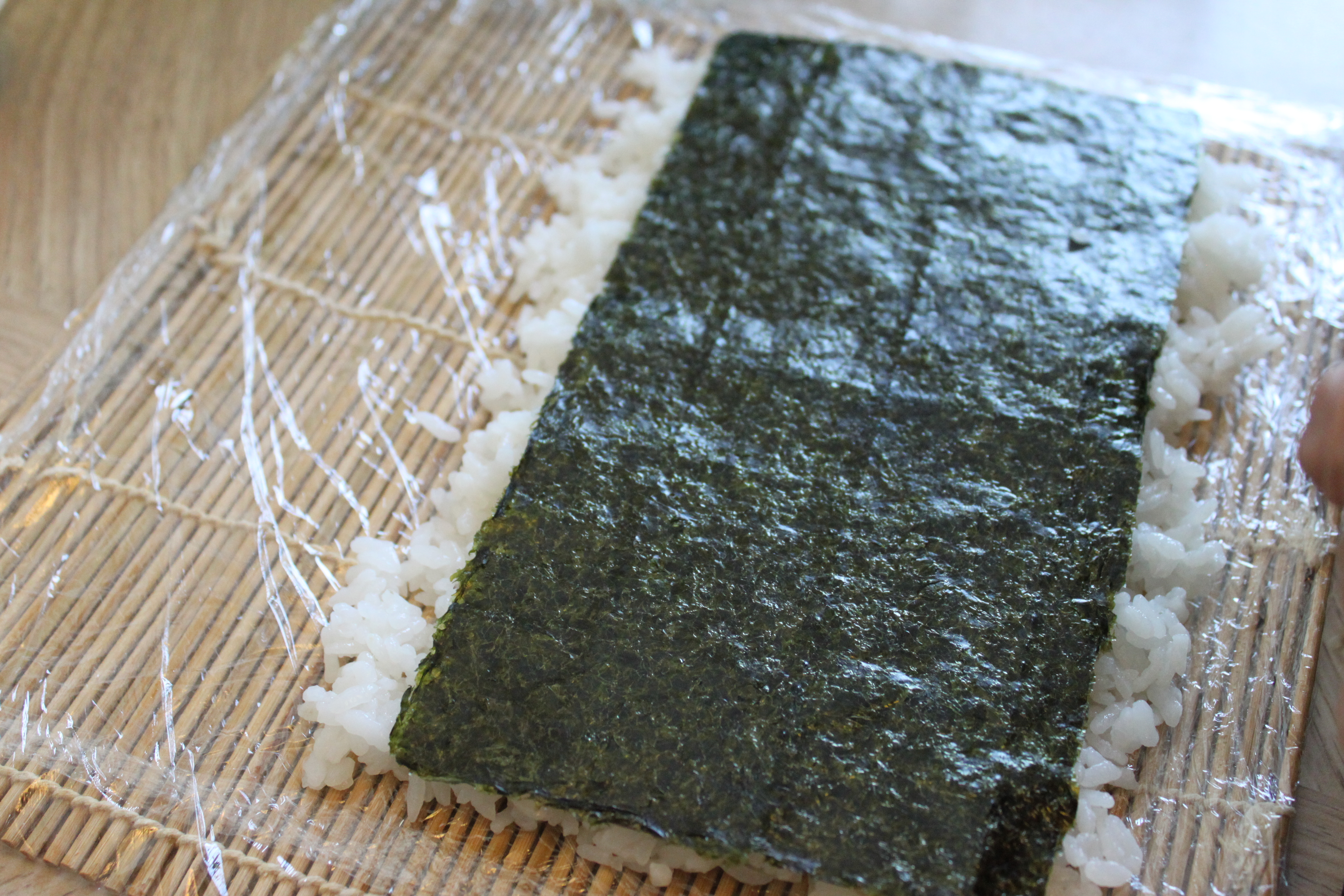
– Lay one seaweed sheet, shiny side down, on the mat. Wet your fingers in the sushi vinegar and spread approximately 1 cup or less (measuring cup) of rice thinly and evenly onto the seaweed sheet.
– Flip the seaweed sheet over so the rice is facing down; then line the edge of the seaweed sheet at the bottom of the bamboo mat.
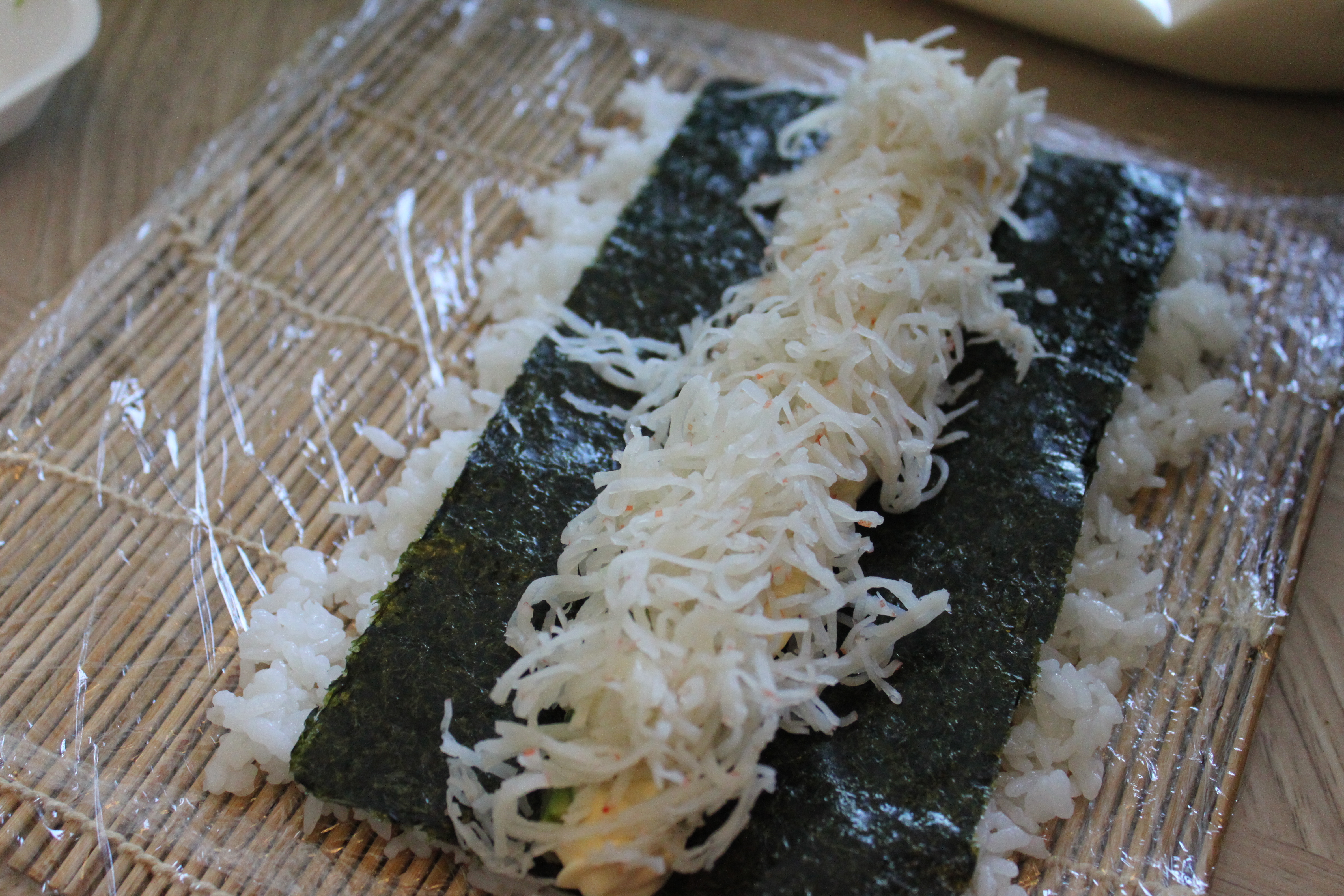
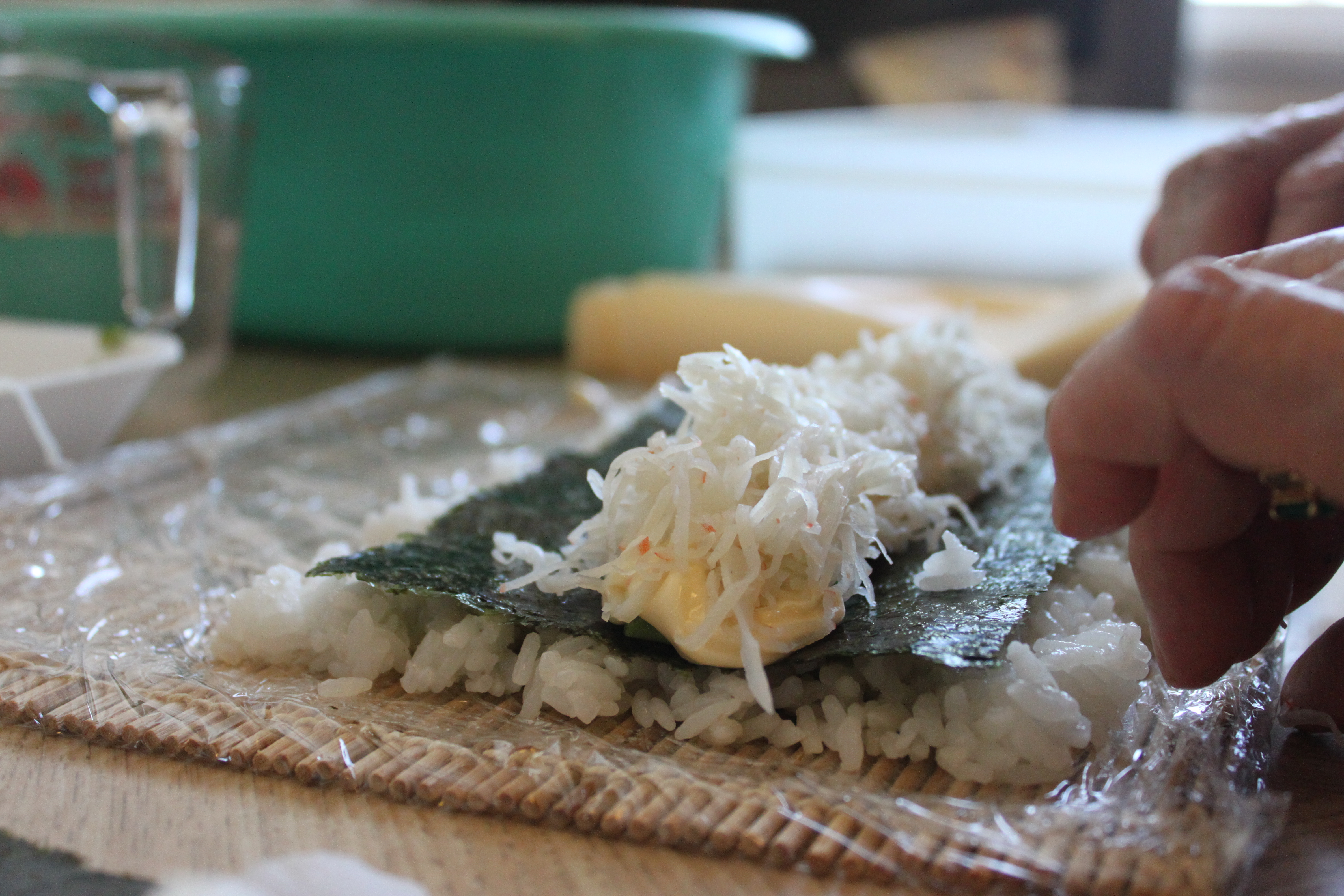
– In the centre of the seaweed sheet, first place the avocado, then lightly squeeze one layer of Japanese mayonnaise over (don’t be too heavy-handed) and finally add the crab meat on top
From bottom: rice, nori, avocado, mayonnaise, crab meat
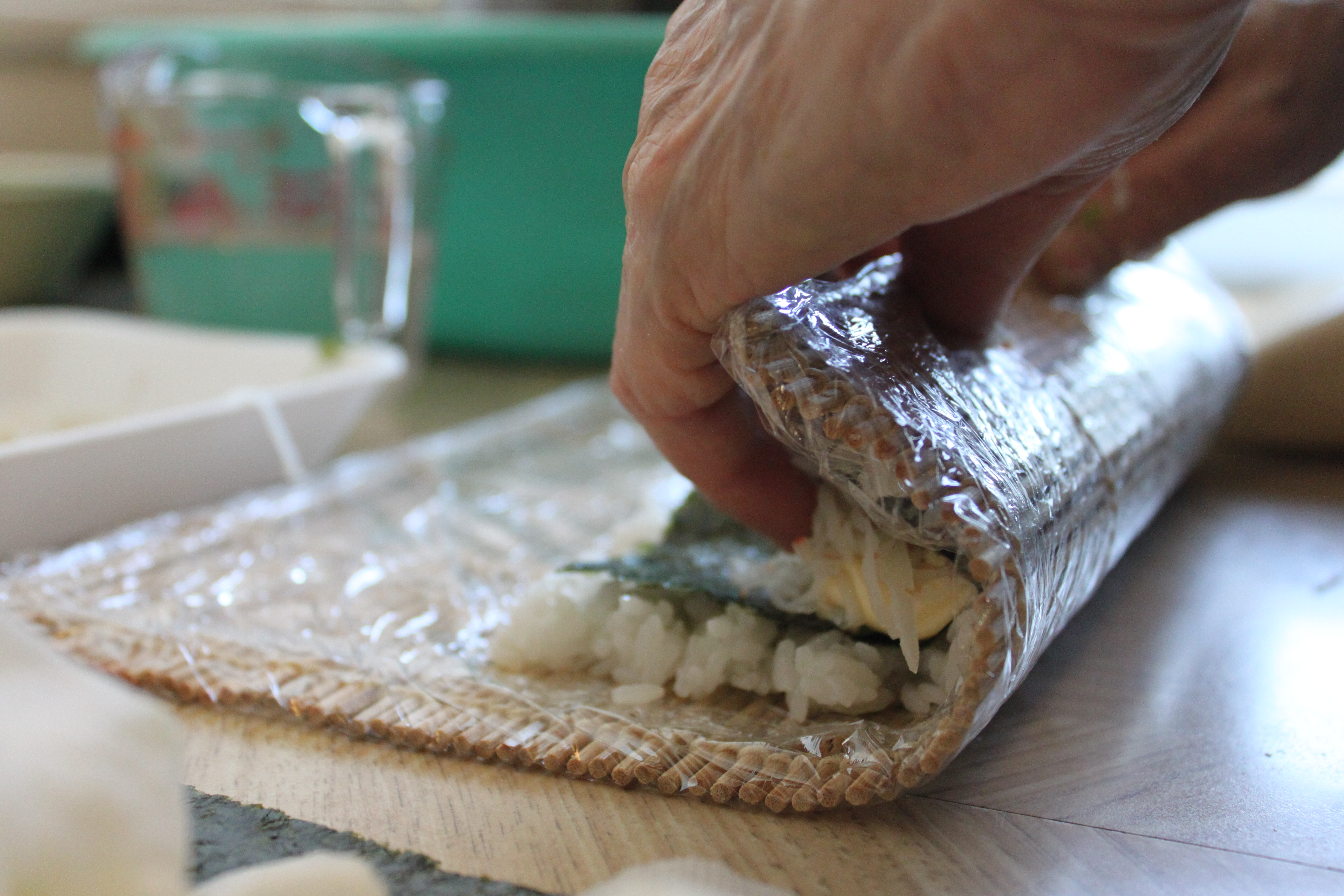
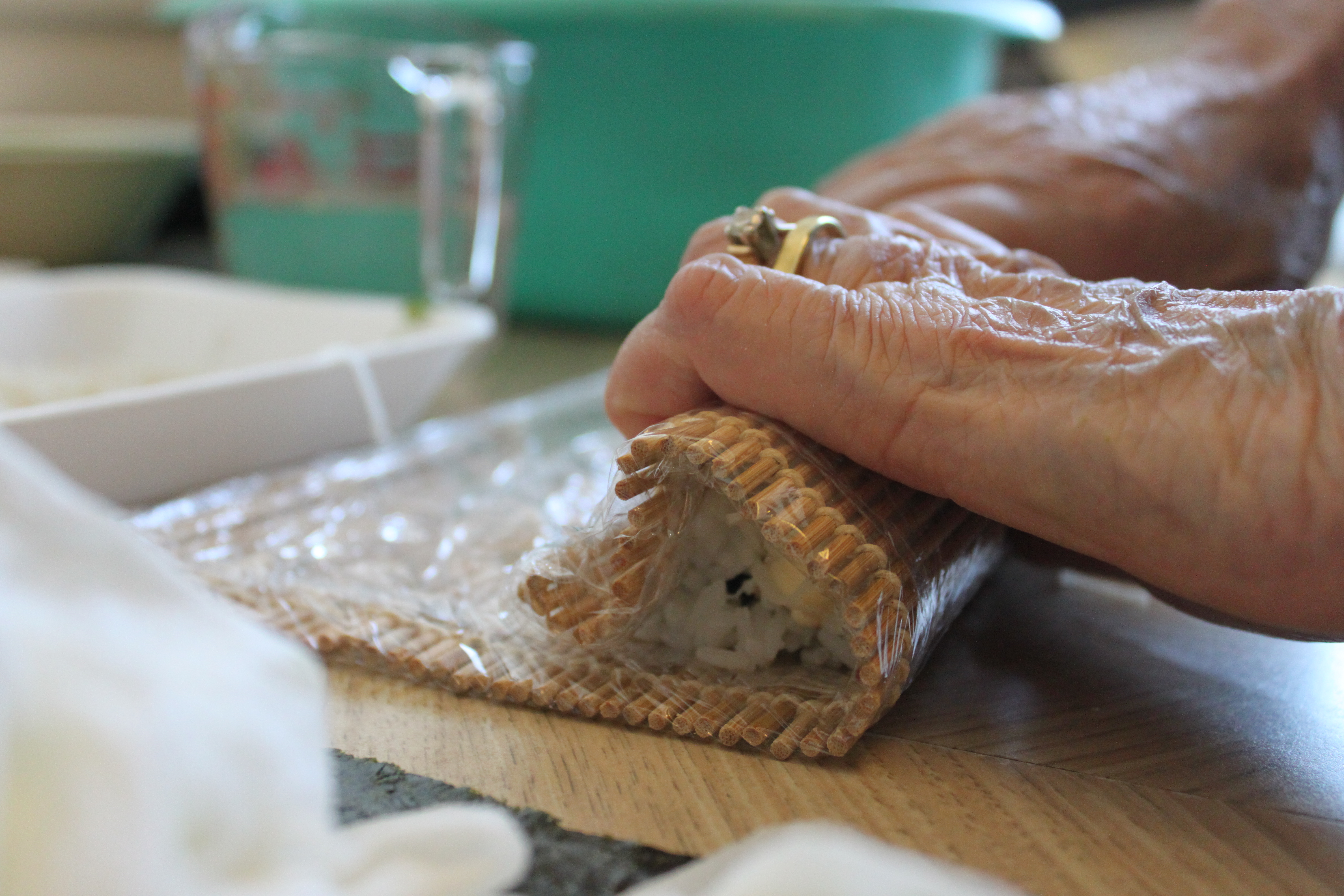
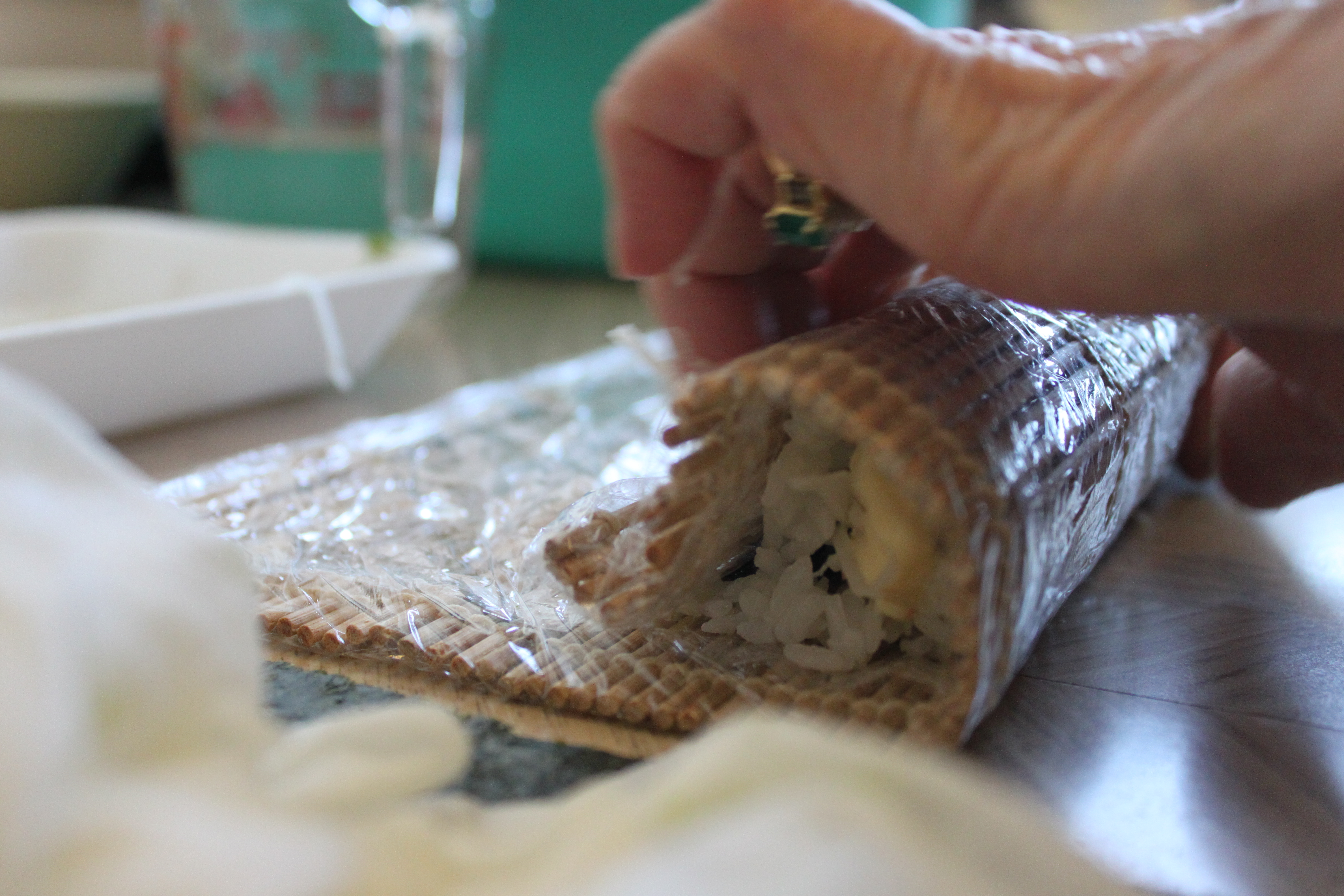
– Grab the edge of the mat closest to you; keeping the fingers in place with your fingers; start to roll it into a tight cylinder;
– Using the mat to shape the cylinder. Lift the edge of the mat slightly and roll it forward, apply pressure gently.
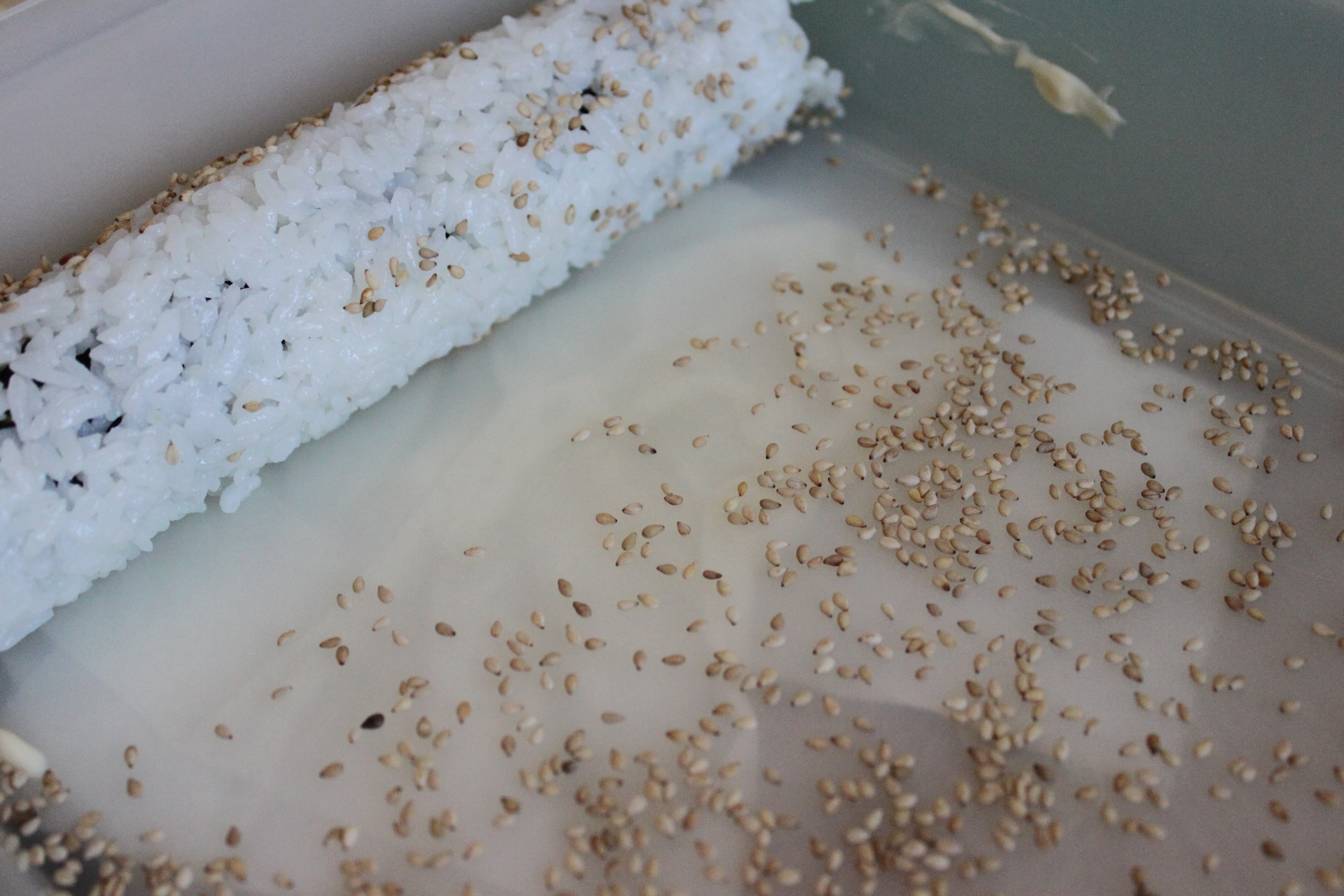
roll forward and push gentlyAlmost there….Another roll completed! How many more to go?Ready to cover the roll with white sesame
– Repeat until all the rice is used up.
– Cover the bottom of a rectangular container or tray with the white sesame, glide the sushi roll over until it’s even covered.
– Cover the completed rolls with a clean damp cloth until you are ready to serve.
– When you are ready to serve: Use a sharp knife and cut each roll first in half, then cut each half into 3 pieces. After a few cuts, remember to clean the knife with a damp cloth (to keep the rice from sticking and maintain a clean finish).
Notes:
– We always use the cut seaweed sheets for smaller roll sushi, mostly tuna or cucumber rolls.
– Some of the ingredients we estimated the quantity (for example the sesame seeds), please adjust accordingly.
– Fresh crab meat can be used; my mother in law usually purchases the imitation crab meat, and other ingredients from Fujiya (912 Clark Drive, Vancouver, BC).
– Other recipes include cucumber; sometimes we use flying fish roe (tobiko) instead of toasted white sesame seeds, or both (OO).
Over the weekend I hosted a bridal shower for my dear friend Virginia (Congrats!) and she specifically requested to have corn soup on the menu! I choose to make my favourite recipe, adapted from Jane Lawson’s Yoshoku – Japanese food western style with slight modifications (added chicken stock, omitted sesame oil). This is very easy to make; it’s great as a starter or a meal on its own, Enjoy (OO).
Ingredients: (Serves 2 – 4 (as small starter)
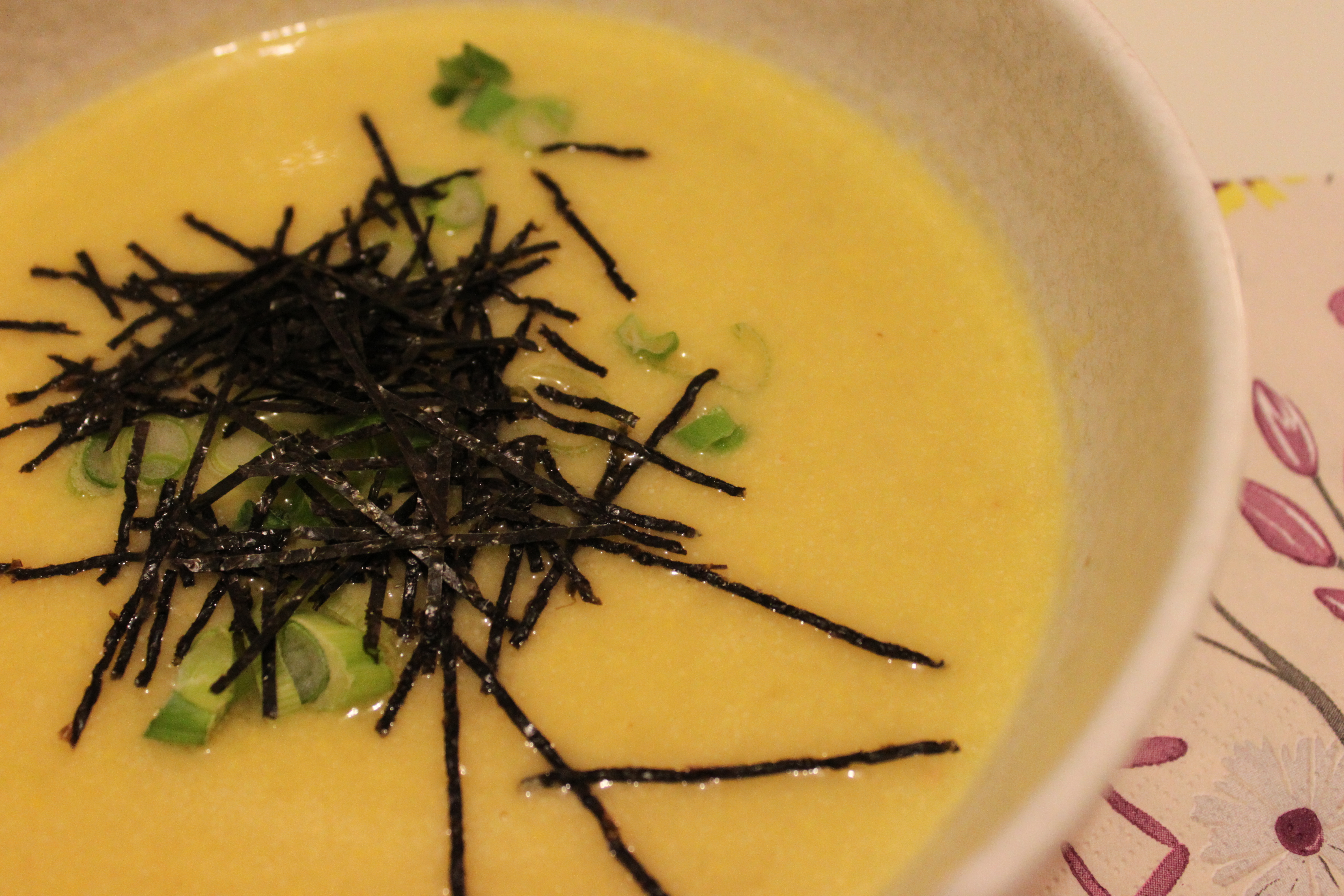
4 cups kombu stock, 1 cup organic low sodium chicken stock (optional), 4 cobs fresh sweet corn (peaches and cream); 1 oz organic unsalted butter, 1 teaspoon grape seed oil, 1 medium leek (white portion only, thinly sliced), 1 celery stalk (finely chopped), 1 to 2 garlic clove (crushed), 1 teaspoon finely grated ginger, 1/4 (60 ml) cup mirin, 1/2 cup (125 ml) cream, salt and pepper to taste, nori flakes and thinly slice green scallions (optional for garnish).
Preparation:
– Cut the kernels from the corn cobs, set kernels and cobs aside.
– Prepare the kombu stock; in a separate saucepan, bring chicken broth to boil, turn off heat and set aside.
Kombu stock: (1 piece of kombu (around 20 g – gently cleaned and wiped with damp cloth), 4 cups of cold water
– Put the kombu and 4 cups of cold water in a large saucepan. Heat up the water slowly on medium low heat; just before it starts boiling, remove the kombu.
– When kombu stock is ready, add corn cobs and hot chicken stock to the pan and return to the boil. Reduce to simmer and cook for 15 to 20 minutes, remove from the heat, discard the corn cobs and set aside.
– In a separate 8 quart stock pot, add butter and grape seed oil, melt over medium heat.
– Add leek, stirring regularly, cook for approximately 5 minutes or until lightly golden. Add celery, garlic and ginger, cook until fragrant (approximately 1 minute); stir in corn kernels, mix well with other ingredients and cook another 1 to 2 minutes.
– Add stock and mirin to corn and leek mixture, and bring to boil over high heat, then reduce to simmer and cook for 20 minutes.
– Using an upright blender, process and puree the soup in small batches (be mindful to fill blender jar less than half way).To prevent the liquid from splattering, remember to allow heat to escape; remove the blender’s lid centre insert (cap), hold a kitchen towel over the top when blending.
– Return puree soup to stock pot, stir in the cream and heat gently over low heat, do not bring to boil.
– Season to taste with salt and pepper; to serve, sprinkle with nori flakes and green scallions (optional).
Notes:
– I added the organic chicken broth (optional) for more flavour; the original recipe calls for 4 cups of kombu stock only, because I’ve added the additional cup of chicken broth, the soup is not as thick. If you want a thinner soup, add more cream.
– For a smoother and more refined texture, push the puree soup mixture through a fine sieve before stirring in the cream.
– I opted to use a light cream and seasoned the soup with sea salt from Okinawa (a precious gift from my friend “FanFan”, thank you very much!!).
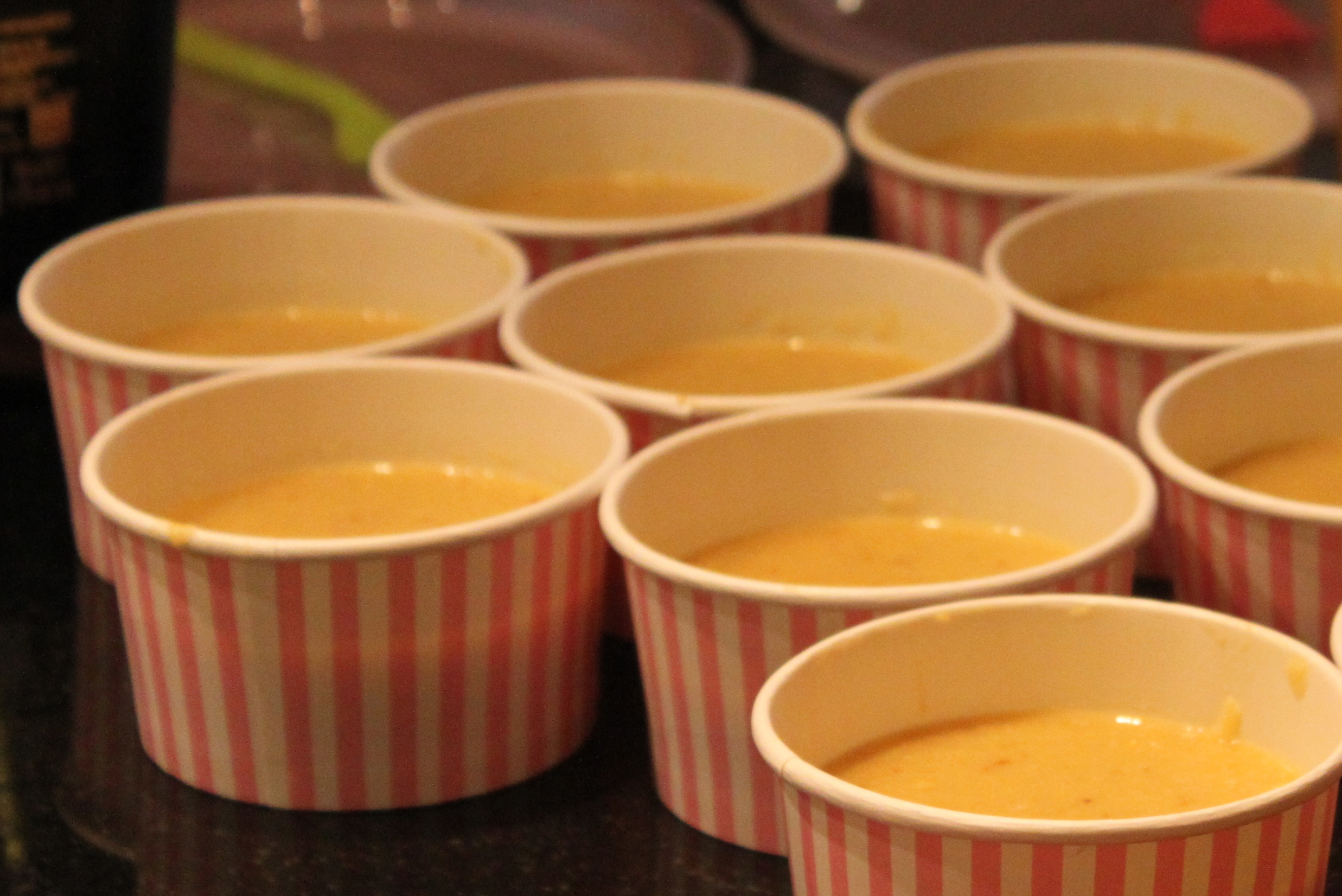
Corn Soup in “Pink Striped” Icecream paper bowls for the bridal shower
– For the bridal shower, I served them in little “ice-cream” cups:)
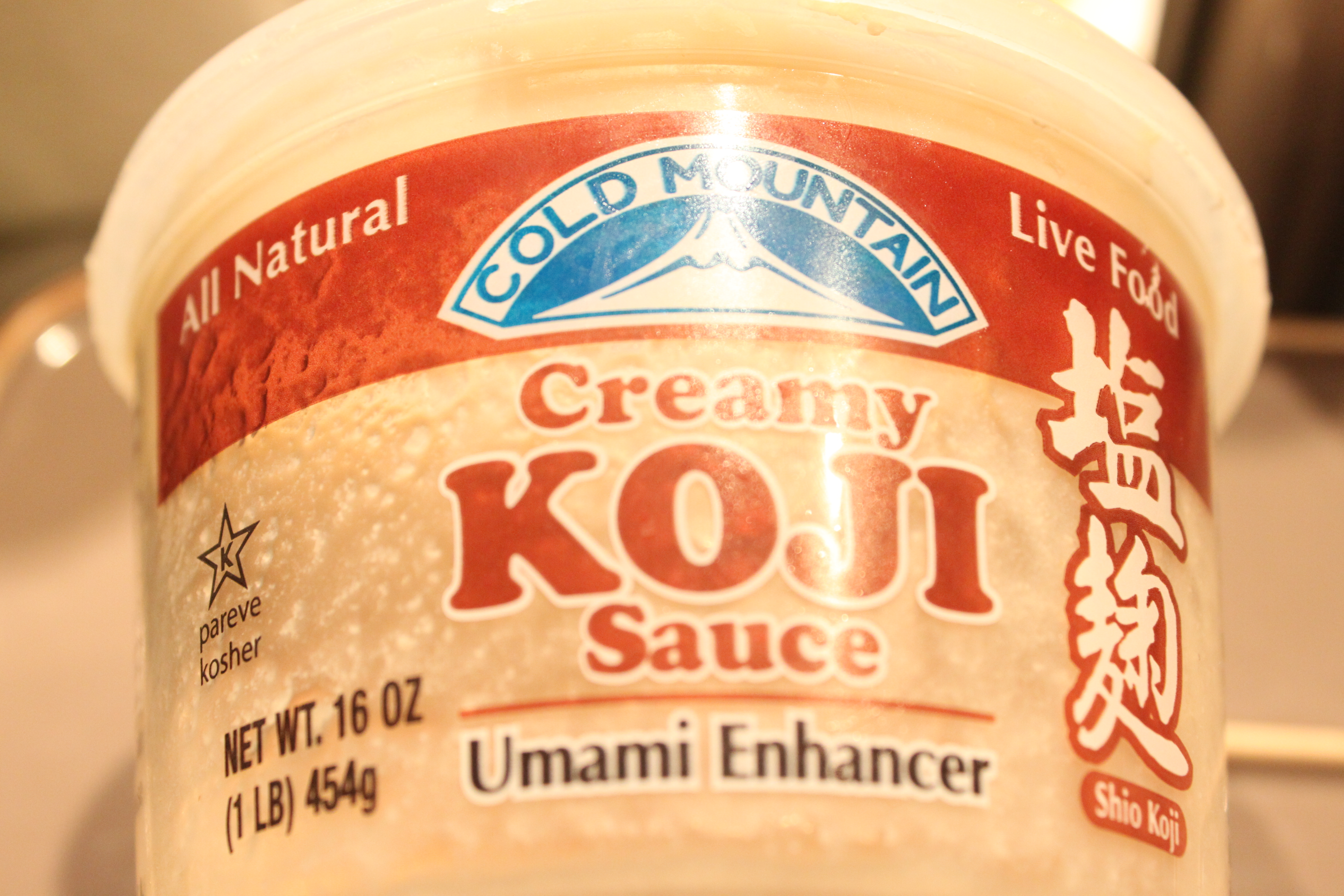
Shio-Koji is a Japanese condiment made from salt, and rice inoculated by koji,the mold used to make sake and miso. It is a “live” food which is rich in enzymes which brings out the flavour in foods ; it works particularly well with fish and meats (chicken/pork). The saltiness is actually mild and sweet, it can be used in place of salt in any dish or sauces. Saveurmagazine recently included shio-koji in their 2014 Top 100 list (http://www.saveur.com/article/kitchen/shio-koji).
As recommended, the golden ratio is 1:10 (shio-koji weight : weight of ingredient).
A couple of months ago I went on a grocery shopping trip with my Twin and picked up my shio-koji from Izumi-ya,a Japanese food store in Richmond, BC. Last weekend her husband Shin showed me how to use it as a marinade for the grilled mackerel, I will be posting the simple delicious recipe shortly.
To my “Twin” and Shin, thank you very much for sharing and expanding my culinary knowledge (OO).
Hi everyone, thank you very much for tuning in this morning! Here are the links to the information which I mentioned on Ms. Deborah Moore’s “Modern Deborah” on AM 1470; I have already posted the restaurant review and Soba / Mackerel (Saba) recipes!
If you have any questions, you are welcome to contact me at goldenapron@gmail.com. ENJOY (OO)
Avid Japanese food lovers are no strangers toMiku and its sister restaurant, Minami,which both specialize in aburi sushi (lightly seared nigiri sushi that has been torched with open flame).
During the holiday season, I decided to try Miku(new location at 70-200 Granville Street, next to Canada Place) with my friend Helene, who was visiting from Hong Kongfor an early Sunday lunch. I made the reservations through OpenTable(it’s so convenient!); although it was an early lunch, the restaurant was already fairly busy, the coveted window seats (with waterfront view) were all occupied and we were seated very close to the bar in the mid-section.
We had to wait much longer than expected to place our orders; I do appreciate the efforts of another server(who was working at the bar), who jumped in and provided us with attentive service, ensuring things were moving along smoothly and our dishes were delivered promptly.
We decided to share three courses and dessert:
Kaiso Seaweed Salad –a medley of organic baby greens, heirloom tomatoes, cucumber, radish, crunchy arare (bite-size Japanese cracker) with sesame ponzu vinaigrette – it was a nicely dressed salad with balanced flavours, I would definitely order this again.
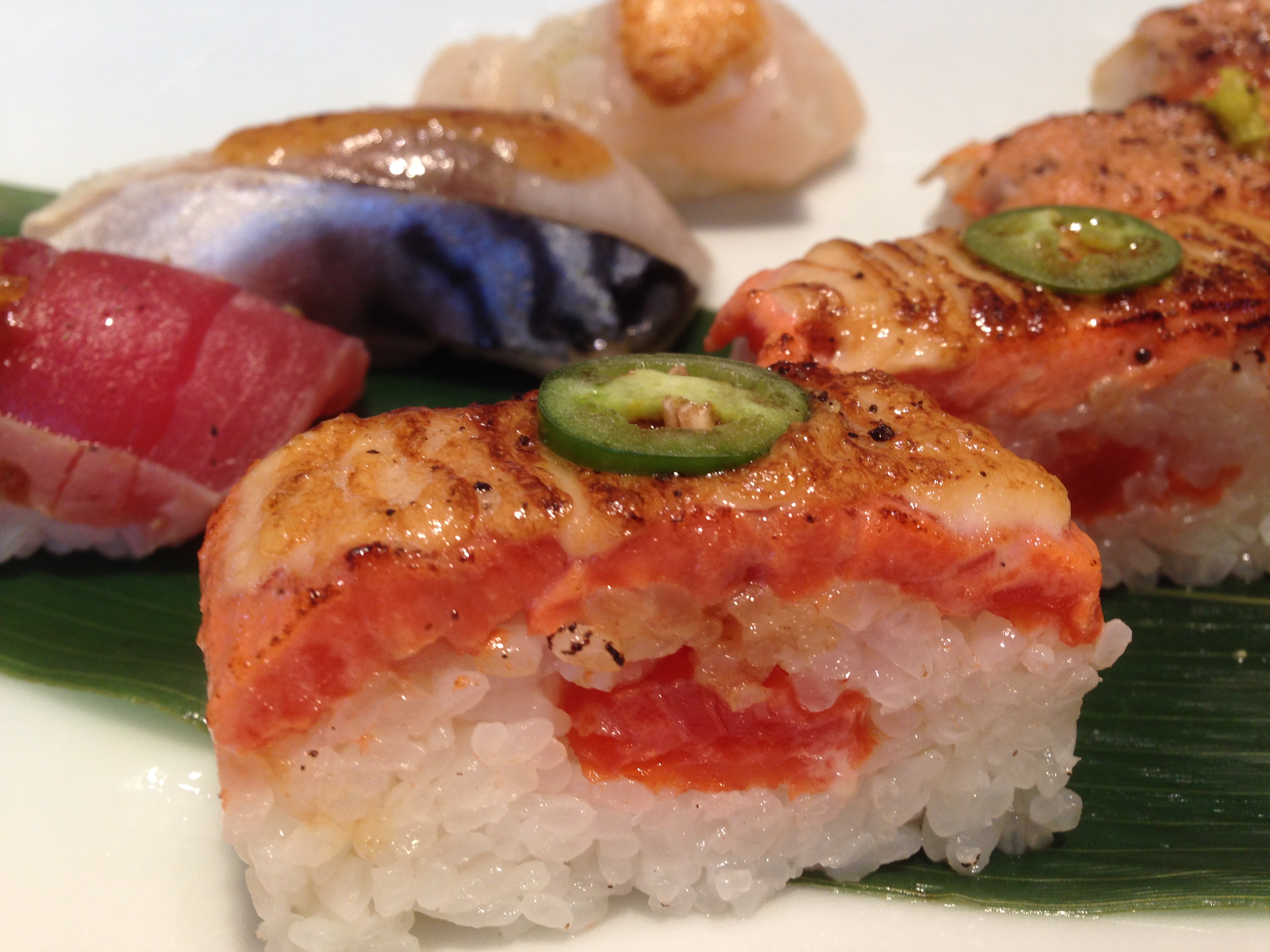
Aburi Sushi Lunch (Picture shown in Header) –consists of 8 pieces from their selection of their aburi, oshi and roll sushi, served with miso soup, each piece is paired with their own special sauce. This is definitely an excellent introductory “coursefor anyone who doesn’t have any previous experience with aburi sushi;my favourites were the salmon oshi (with jalapeño and special Miku Sauce)and the ebi oshi(pressed prawn with lime zest and ume (Japanese plum) sauce).
Kaisen Soba Peperoncino –Soba noodles “stir fried” with soy, garlic, olive oil, shrimp, squid, baby Bok choy, sweet peppers, shiitake mushrooms and tempura bits. It has all the elements of a great tasting “fusion” dish and the spiciness was just right; however we found the noodles a bit greasy.
Lemon Cream – poached pears, gingerbread cookie, kaffir lime sauce. The dessert exceeded my expectations; the “tartness’ of the cream was balanced nicely with the sweetness of pears and mixed fruits. Overall it was very pleasing to the palate.
I’ve been to Minami a few times before and this was my first visit to Miku; I guess I may have gone with slightly high expectations. Although the initial slow service was a bit disappointing, I must say the oshi sushi was still exceptional; it is still on balance worth a second try.
Information:
Miku – #70 – 200 Granville Street (by Canada Place)
Authentic Japanese flavours with fusion twists; high price point; reservations recommended (available through http://www.opentable.com). Indoor public parking available close by (next to Waterfront Sky train station); better yet, take the sky train on a nice day and enjoy a walk by the waterfront after lunch (OO).











 My Golden Apron